
DOCUMENT STORAGE SYSTEMS
Managing physical records at scale requires more than storage space. It requires structured systems that allow organizations to track, retrieve, and manage documents with accuracy, speed, and accountability.

At GRM Information Management, our document storage systems are designed to provide complete visibility into physical records while ensuring that every asset is securely stored, tracked, and accessible when needed.
DOCUMENT STORAGE SYSTEMS OVERVIEW
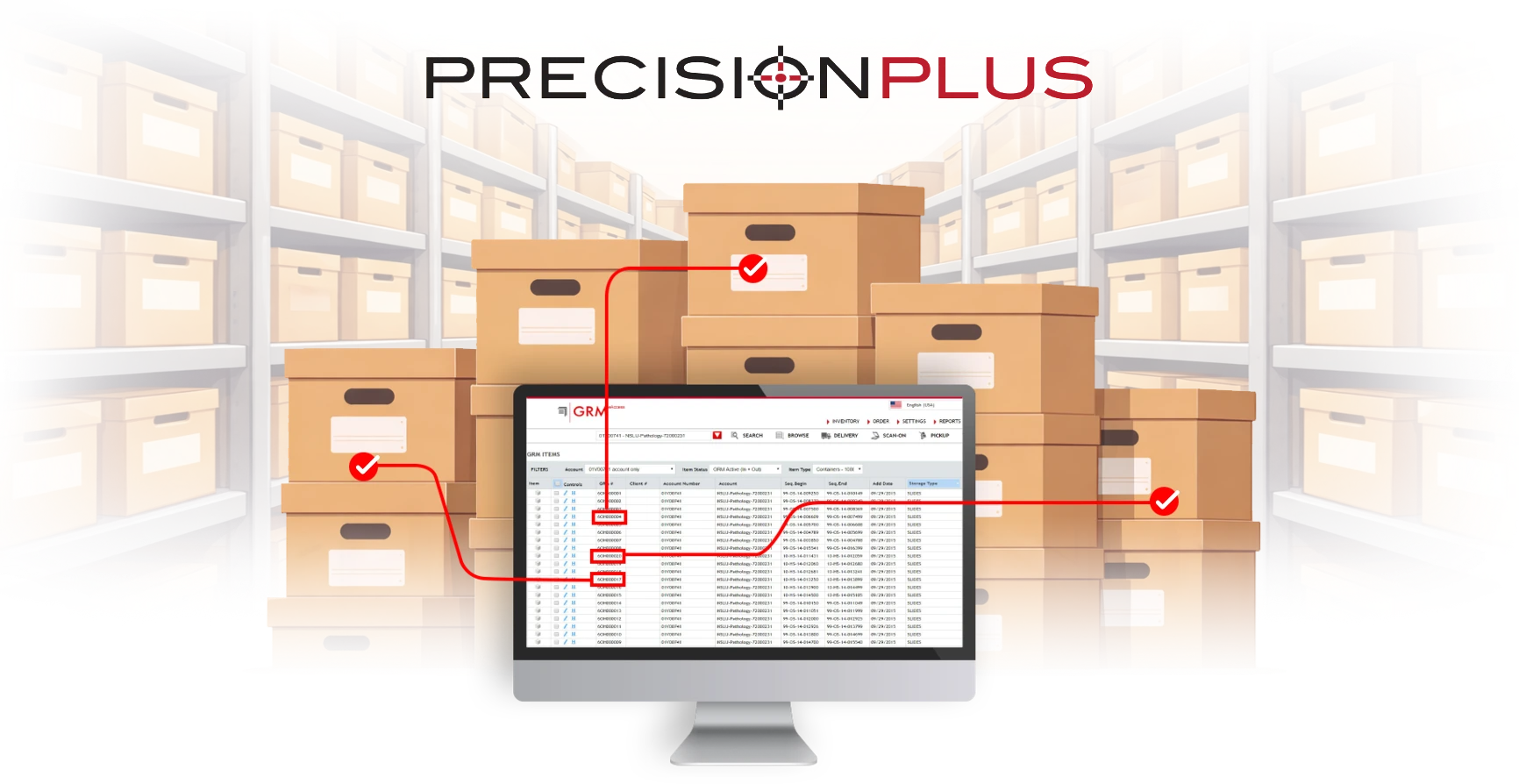
Document storage systems combine digital inventory management, tracking infrastructure, and operational processes to control how physical records are stored, accessed, and moved.
At GRM, these systems are built around a centralized digital platform supported by barcode tracking and structured workflows.
WHAT ARE DOCUMENT STORAGE SYSTEMS?
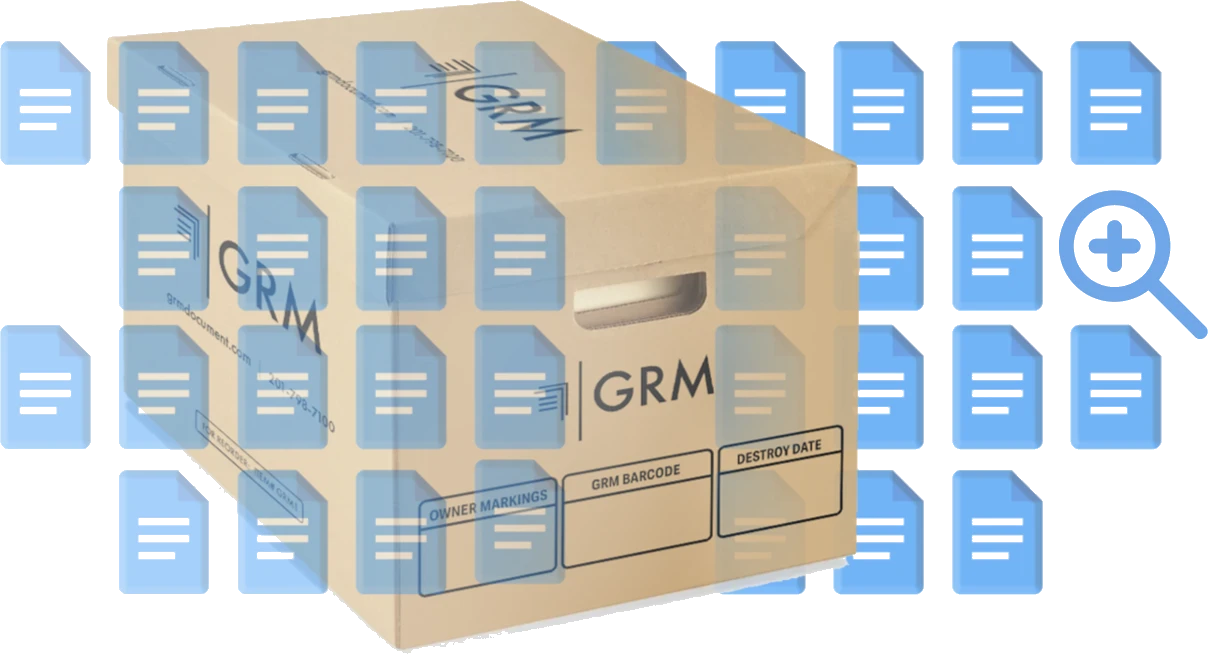
Document storage systems are structured frameworks that combine technology and operational processes to manage physical records.
They provide:
- Digital visibility into physical records
- Structured tracking of document movement
- Controlled retrieval and delivery
- Integration between storage facilities and inventory systems
CORE COMPONENTS OF DOCUMENT STORAGE SYSTEMS
Digital Inventory Management Infrastructure
GRM maintains a digital inventory layer tied to physical storage facilities.
- Cataloging of records
- Searchable indexing
- Container and folder-level tracking
- Integration with PrecisionPlus

eAccess Records Management Portal
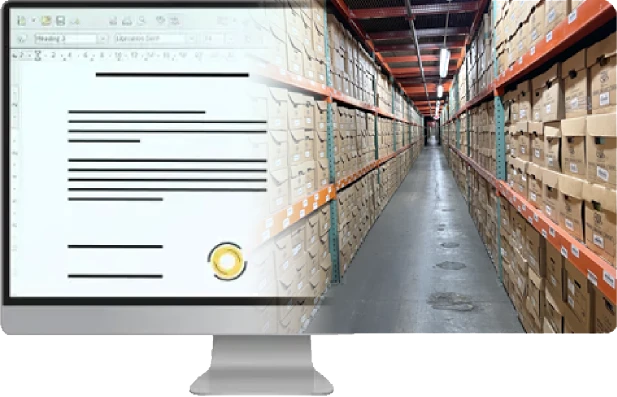
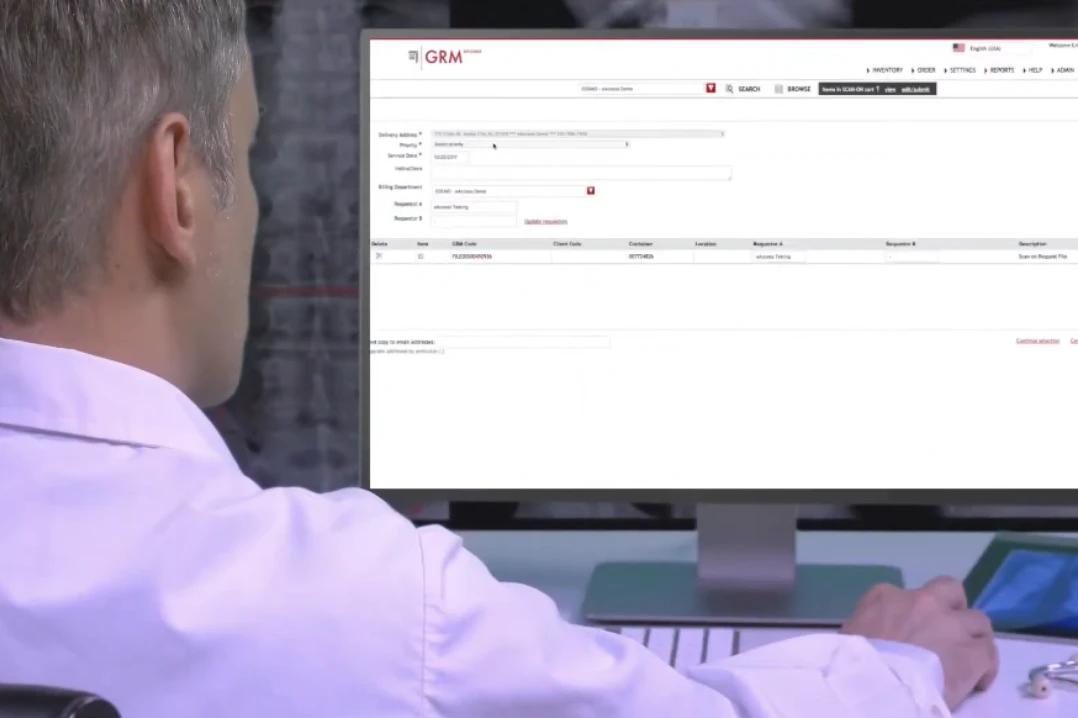
The eAccess portal is the central interface for managing stored records.
Clients can:
- View inventory
- Search by barcode, keyword, or metadata
- Request pickups, deliveries, and scanning
- Generate reports (audits, destruction eligibility, inventory changes)
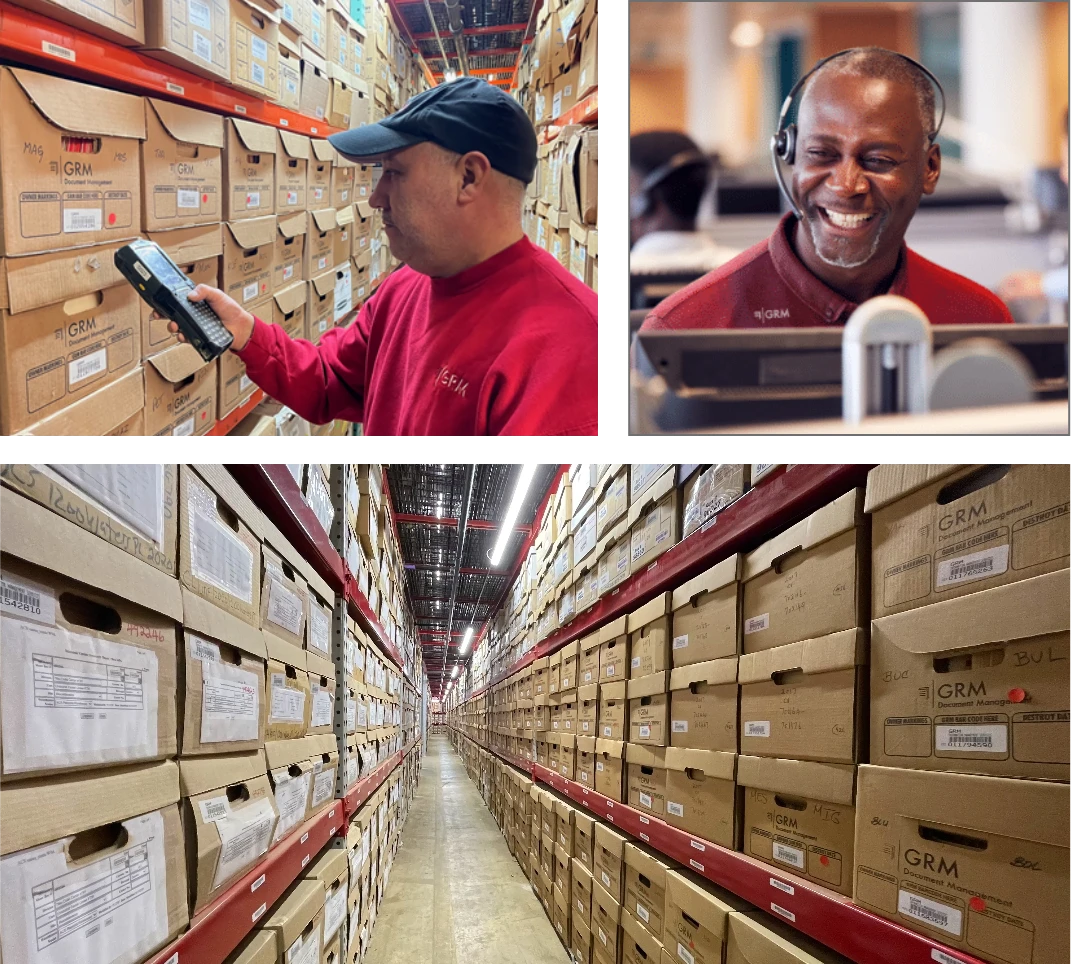
Barcode Tracking System
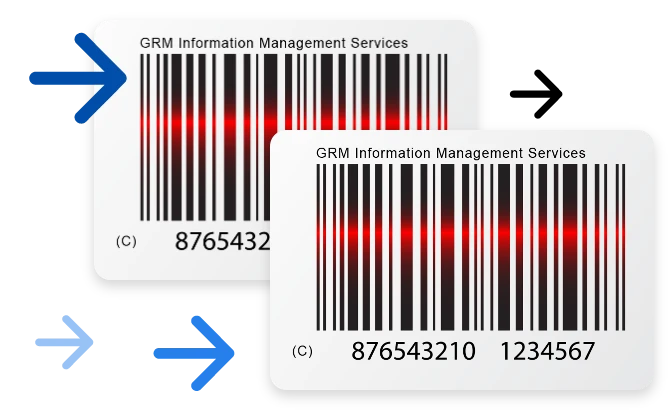
GRM maintains a digital inventory layer tied to physical storage facilities.
- Cataloging of records
- Searchable indexing
- Container and folder-level tracking
- Integration with PrecisionPlus
How Document Storage works
Inventory Capture and Indexing
Records are catalogued and assigned metadata and barcodes
Storage and Location Management
Records are placed in controlled storage environments and digitally mapped.
Search and Request
Users search records through eAccess.
Controlled Retrieval and Dispatch
Requests trigger structured workflows governed by PrecisionPlus.
Delivery or Access
Records are delivered to you, scanned & emailed or you can review on site.
PRECISIONPLUS OPERATIONAL PROCESS

Pickup


Barcoding

Shelving

Retrieval

Delivery
CHAIN OF CUSTODY AND TRACKING
Barcode-Based Chain of Custody
Each movement is logged to ensure traceability.
- Prevents document loss
- Ensures accountability
- Provides visibility
PrecisionPlus Custody Framework
Standardized handling ensures consistency across all facilities.
Compliance-Focused Documentation
Supports:
- HIPAA
- SOC 2
- ISO standards


Time to take control of your document storage?
Join 1,000s of other businesses that trust GRM.

RETRIEVAL SYSTEMS
Search-Driven Retrieval via eAccess
Users search by:
- keyword
- barcode
- metadata
Operational Retrieval via PrecisionPlus
Includes:
- locating
- removing
- dispatching
Client Access Rooms
Facilities include secure spaces for on-site record access.
WHY DOCUMENT STORAGE SYSTEMS MATTER
These systems allow organizations to:
- Maintain visibility into records
- Improve retrieval speed
- Ensure compliance
- Reduce risk
- Scale operations
WHY GRM INFORMATION MANAGEMENT
At GRM, document storage systems reflect how organizations actually manage records.
We combine:
- eAccess digital platform
- Barcode tracking
- PrecisionPlus processes
- Integrated logistics
FREQUENTLY ASKED QUESTIONS
What are document storage services?
Document storage services allow organizations to securely store and manage physical records in professionally operated storage facilities. Instead of storing documents in offices or internal warehouses, businesses partner with providers like GRM Information Management to place records in secure offsite document storage facilities where they are protected, indexed, and available for retrieval when needed.
How secure are document storage facilities?
Professional document storage facilities are designed to protect sensitive business records through multiple layers of security. At GRM Information Management, our facilities operate with controlled access procedures, monitoring systems, and strict chain-of-custody protocols. These safeguards ensure documents remain protected while still being accessible when organizations need to retrieve or manage their records.
How quickly can stored documents be retrieved?
What industries use document storage services?
Many industries rely on document storage services to securely manage physical records and meet regulatory requirements. Healthcare providers, law firms, financial institutions, government agencies, and large enterprises frequently use secure offsite document storage to protect sensitive information, maintain proper records retention, and ensure important documents remain accessible when required.
What is the difference between document storage and records management?
Document storage focuses on the secure preservation of physical records in controlled storage facilities. Records management is broader and involves the full lifecycle governance of information, including retention policies, compliance oversight, document destruction, and digital conversion. Organizations often combine document storage services with records management strategies to manage information more effectively.
How does offsite document storage work?
Offsite document storage begins with securely transferring records from an organization’s location to our professional storage facility. Documents are indexed, barcoded, and entered into an inventory management system so they can be easily tracked and retrieved. At GRM Information Management, this process ensures records remain secure while still being accessible whenever organizations need them.
What compliance requirements apply to document storage?
Compliance requirements for document storage vary by industry and regulatory environment. Organizations in sectors such as healthcare, financial services, and government must follow strict guidelines for records retention, data protection, and document security. GRM is a Secure document storage provider to help support these requirements by maintaining controlled facilities and structured records management processes.
How are records tracked in storage facilities?
Records stored in professional document storage facilities are tracked through digital inventory management systems. Each box or file is labeled and indexed so its location and movement can be monitored throughout the storage lifecycle. At GRM Information Management, chain-of-custody procedures ensure that records remain accounted for from intake through retrieval and delivery.
How long should businesses retain documents?
Document retention periods depend on regulatory requirements, industry standards, and an organization’s internal policies. Some records must be retained for several years to meet legal or compliance obligations. Document storage services help organizations manage these requirements by providing secure facilities and structured retention schedules that determine when records should be archived or destroyed.
When should companies move to offsite storage?
Organizations often transition to offsite document storage when internal records begin consuming valuable office space or become difficult to manage. Moving records to secure storage facilities allows businesses to free workspace, improve document organization, and ensure sensitive records are protected while still remaining accessible when needed.
Learn More About Document Storage Services
Document storage systems are a core part of secure records management.